Selectmen send POCD comments to zoning panel
Darien's Board of Selectmen voted unanimously to send recommended changes to the 2026 Plan of Conservation and Development to the Planning and Zoning Commission, while opening debate on Great Island events and access policy.
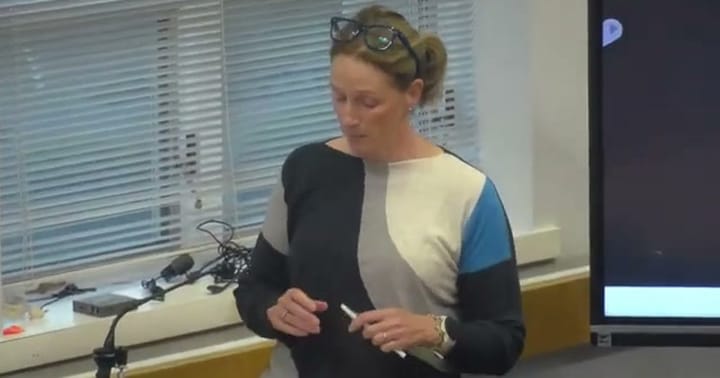
Board of Selectmen · Meeting of September 14, 2026
Darien's Board of Selectmen voted unanimously to send recommended changes to the 2026 Plan of Conservation and Development to the Planning and Zoning Commission, while opening debate on Great Island events and access policy. Board member Monica detailed proposed edits, including designating Great Island as a separate "Great Island Special Planning Area." Staff said the island's parking and site design, now at 60 percent, carries a cost estimate of $4.8 million to $6.7 million, with construction planned for spring through fall 2027. Members weighed whether to allow private weddings and large events, with board member Sarah cautioning that "the house is not something that will be used for events" given its condition, while Mike favored limited test events to "engage in some discovery." The board also approved transfers of $41,000 for the assessor's office and $17,000 for an independent review of the SaltBox Way project, and reappointed Mary McCarthy and Kelly Galvin to town boards.
In the full story:
- Who Was There
- Organizations And Documents Referenced
- The complete report — 3,282 words
Source: the Board of Selectmen meeting of September 14, 2026, reported from the official video recording and transcript.
Checked against the record: before publication this article was automatically compared with the meeting transcript. It was corrected where it differed.
The Full Article
Public Comment: FOIA Access and Great Island Zoning
Background and stakes: Resident Alexis has raised Great Island policy questions with the board before; her public comment Monday followed written comments she submitted the same day. She asked the board to adopt the Board of Finance's practice of posting written public comments with meeting minutes rather than requiring a Freedom of Information Act request.
The question before the body: whether to change its public-records practice and how to justify any future private-event use of Great Island under current R-1 zoning.
Substantive content: Alexis noted that board minutes from August 2025 stated that "current zoning is a constraint on events and a special permit would be required for any event." She cited a 2022 figure she found over the weekend showing Waveney House hosted 50 to 60 weddings annually, generating about $300,000, or roughly $5,000 per event, and asked whether the board had analyzed likely Great Island event revenue against costs including staffing, wear, and lost public access.
The deliberation: The board did not respond directly to Alexis during public comment, as is customary, but First Selectman John referenced her concerns explicitly when opening the Great Island events discussion later in the meeting, calling her part of "a continuum" of resident opinion on the island's future use.
Procedural steps and outcome: No vote or formal response was taken on the FOIA/public-comment posting request. No action occurred on this item.
Implications and what is next: The request to post written comments alongside minutes remains informal; it was not adopted or rejected on the record. Alexis's zoning questions carried directly into the board's later events-policy discussion.
Plan of Conservation and Development: Board Comments to Planning and Zoning
Background and stakes: The Board of Selectmen has been reviewing a draft update to the town's decennial Plan of Conservation and Development (POCD), a state-mandated planning document. Under guidance the board received from staff member Jeremy, the Planning and Zoning Commission can override any board nonendorsement of draft language only by a two-thirds vote, giving the board's comments real procedural weight even though the POCD approval authority rests with Planning and Zoning.
The question before the body: whether to finalize and transmit the board's organized comments, including several late additions, to the Planning and Zoning Commission.
Substantive content: A staff memorandum organized prior board suggestions into two categories: items the board would not endorse as written, and administrative cleanup items. Board member Monica presented four late additions, highlighted in yellow in the memo. First, on page four, item 10, she proposed softening language calling for a new Conservation Commission so the existing advisory Conservation Committee retains latitude to determine not just whether, but how, such a commission should be structured and staffed, "coordinating, of course, where applicable with the RTM." Second, she proposed that draft language calling for connecting Old King's Highway North and South be revised to call only for a feasibility, public-benefit and cost study, noting the project would require a tunnel under the New Haven rail line and approvals from the Connecticut Department of Transportation, Metro-North and the Federal Railroad Administration. Third, on item 13, she proposed softening language implying a binding policy to acquire property adjacent to town facilities, saying a mandate "would bind future boards as well as this one before we've had actually a chance to consider the merit of that acquisition." Fourth, she proposed that zoning-fine and blight-lien revenue remain in the general fund rather than feed the affordable housing trust fund, saying that trust should instead draw on fees from developers who opt out of inclusionary zoning requirements. Monica additionally proposed, under item 20, more flexible language on a regional bus depot "only if we can reasonably produce savings within a reasonable payback period," softened language under item 22 on multifamily-housing ownership versus rental construction to leave the choice to developer economics, and, under item 25, a new map designation labeling Great Island separately as a "Great Island Special Planning Area" apart from other town open-space parcels, citing its "sensitive ecological areas," historic structures and potential for "low impact recreation and potential education, community and adaptive reuse opportunities."
The deliberation: First Selectman John said he supported the language changes but wanted it clearly noted that the underlying recommendations originated from an advisory committee that the board was not obligated to adopt. "I think it ought to be noted that this was a recommendation," he said, adding the point had been made at an earlier meeting as well. Board members Sarah and Marcy both said the changes reflected recent board conversations and offered no objections; Monica said she had "added enough already."
Procedural steps and outcome: Sarah moved to recommend the Board of Selectmen's comments on the draft 2026 Plan of Conservation and Development to the Planning and Zoning Commission; Monica seconded. The board approved the motion unanimously, 5-0 by voice vote, with members John, Sarah, Mike, Marcy and Monica all voting in favor as recorded in the transcript.
Implications and what is next: Staff said they would finalize and transmit the dated comments to the Planning and Zoning Commission "forthwith." The commission retains full authority to adopt the POCD regardless of the board's input, except that overriding a specific board nonendorsement requires a two-thirds commission vote.
Great Island Parking and Site Design Update
Background and stakes: The Great Island Design Committee began meeting in April 2026 and has been refining site plans and cost estimates since; Monday's session was the first comprehensive update since late June.
The question before the body: to review design and cost changes since the prior presentation ahead of permitting.
Substantive content: The project is now at the 60 percent design stage, with permitting beginning and a committee meeting scheduled by Zoom the following Thursday. The schedule calls for bidding in December and January, a town appropriation process in February and March, and construction from spring through fall 2027. The vehicular plan retains 83 total spaces, including 63 gravel spots, using pervious pavement where slope and soil allow and standard asphalt elsewhere; a previously planned stabilized-lawn parking area was removed from the design. A mulch pedestrian path was also eliminated in favor of a boardwalk along the northern causeway, made of a decking material staff referred to as "Caboni," chosen for durability and low maintenance; guardrail material is still under review. Six ADA parking spaces are planned, four near the main lot and two near the southern end, developed with input from landscape consultant Reed Hildebrand, described as having "extensive ADA experience." An ADA-accessible drinking fountain was added near the main parking area. To cut electrical costs, the design now routes power from the existing traffic circle feed and from a line off Ziggy's Way, with an additional feed from the stables area, rather than a more expensive original approach. Staff surveyed about 550 trees on the property; the plan now removes 63, including 45 invasive species and 18 in poor condition or posing a hazard, replacing them at roughly 1.5 new trees per tree removed, each about 15 feet tall at planting, with three to eight somewhat taller. Signage has been pared to one welcome sign and four pedestrian directional signs plus required traffic and ADA signage, with material decisions expected at a September 24 meeting. Two lights were added at the traffic circle entrances; all lighting is dark-sky compliant and remotely programmable. The total cost estimate was corrected during the presentation to a range of $4.8 million to $6.7 million.
The deliberation: A board member raised concerns about accessibility near the two ADA spaces furthest from lighting, suggesting an additional light fixture given that "it takes a little more time sometimes to get into the cars." Staff agreed to examine the issue ahead of the September 24 meeting. Another member questioned why the boardwalk runs along only one side of the causeway, requiring pedestrians to cross; staff said space constraints on the opposite side made that unavoidable. Board member Marcy called the committee's work "a very thoughtful job," and First Selectman John said the town was "starting to get really irritated about not being able to access this property."
Procedural steps and outcome: This was a presentation item; no vote was taken.
Implications and what is next: The committee's next meeting is September 18 by Zoom; signage and material choices are expected to be finalized at a September 24 session before the design moves toward permitting and a winter bid process.
Great Island Events Policy
Background and stakes: The board last publicly discussed Great Island events policy in August 2025, when minutes noted that current R-1 zoning constrains events and would require a special permit. Resident interest ranges from large weddings and equestrian events to concerns about noise, environmental harm and loss of quiet public access.
The question before the body: how to begin shaping a policy position the board will eventually need to present to the Planning and Zoning Commission as part of any special-permit or zoning-change application.
Substantive content: First Selectman John described residents who have asked, in some cases repeatedly, to host their children's weddings on the island, alongside requests for horse events with up to 1,000 attendees and polo matches, against residents like Alexis who favor minimal disruption. He said any application to Planning and Zoning would need to specify "what we envision the uses of the Great Island to be and how much of it we propose for, say, given time periods."
The deliberation: Board member Mike favored allowing a limited number of larger events to "engage in some discovery" without foreclosing options, saying the town could later restrict based on experience. Board member Marcy agreed the town itself, rather than private vendors, should run initial test events to learn operational impacts before any outside use is permitted. Sarah said the island's historic house should be explicitly excluded from event use given its condition: "That's just it, right?" she said, and raised unresolved questions about shuttle transport from parking to the Great Lawn and keeping attendees from wandering into restricted areas. Monica recalled fielding varied resident ideas since the town's initial purchase of the property, including a proposal for a beach sauna, and said noise from any event "is going to carry over the water" given the island's limited abutters. First Selectman John separately raised the unresolved question of what to do with the deteriorating historic house itself, suggesting demolition to create "an immense great lawn" was one option, while cautioning the board should not bind future administrations; a staff member said carrying costs for the building are lower than commonly assumed. One board member suggested that if private vendors are eventually permitted, the town should limit caterers and tent companies by contract, drawing on personal experience with vineyard-wedding vendor restrictions.
Procedural steps and outcome: No vote was taken. The board reached informal consensus to favor a cautious, town-tested approach before permitting private events, but did not adopt a formal position.
Implications and what is next: First Selectman John said the board needs to "broaden public outreach" before finalizing a position, since any Planning and Zoning application will require a specific statement of intended uses.
Great Island Access, Parking and Security Policy
Background and stakes: With the parking design advancing, the board must decide how to restrict vehicle and pedestrian access once the lot opens, an open question since no consensus mechanism has been chosen.
The question before the body: what combination of physical and administrative access restrictions the board should pursue.
Substantive content: First Selectman John outlined resident input ranging from fully resident-only access (cars and pedestrians) to a beach-pass-style system open only to residents, to an open-access model charging any visitor a daily fee. He said the town is "about to sign an agreement" with a parking-management vendor for commuter parking that also offers license-plate camera technology, which could allow in-town vehicles free entry while mailing fines to unregistered vehicles, similar to the town's existing parking-ticket process. Physical options discussed included a staffed guard shack like those at town beaches. Plans call for a gate near the stables and another at the southern causeway to prevent vehicles from driving where pedestrians will be walking; power is being run to the southern causeway now, with the northern causeway left unwired for now so a future board is not locked into that approach.
The deliberation: Board member Mike asked that residents submitting input explain their reasoning, not just their preference, saying "you never know where the next great idea is coming from." Marcy said her primary concern was property safety and the ability to track who enters and exits. Sarah pointed to Waveney House and Todd's Point as models where non-Darien residents are currently permitted and said she would eventually favor opening Great Island broadly once capital work is complete, since "the island is large enough." First Selectman John noted that for now "there is nothing really to do" on the island beyond the 83 parking spaces, limiting near-term safety concerns.
Procedural steps and outcome: No vote was taken. The board agreed informally to solicit public input on preferred restriction models and the reasoning behind them.
Implications and what is next: First Selectman John asked residents to specify not just a preferred access model but how it would be implemented, ahead of a future board decision that will determine what physical infrastructure (gates, cameras, staffing) is built.
Budget Transfers: Assessor's Office and SaltBox Way Review
Background and stakes: The assessor's office could not finalize a contract with vendor Tyler for assessing services by the end of fiscal year 2026, so a previously discussed transfer did not proceed to the Board of Finance at that time; the contract has since been executed.
The question before the body: whether to approve transfers funding the assessor's office transition and a required independent engineering review of the town-led SaltBox Way project.
Substantive content: Staff member Jen said the assessing-services contract carries a not-to-exceed cost of $27,000, expected to be nearly fully used, with the remainder of a $41,000 transfer covering seasonal and temporary staffing until an employee identified as Greg transitions to full-time assessor around October 5. Separately, staff member Ed and Jen explained that because the town is itself the applicant on the SaltBox Way drainage project, town staff cannot serve as the independent third-party reviewer; an outside reviewer the town has used previously quoted $17,000 for the review, to be funded from Board of Finance contingency into Planning and Zoning professional services, since the original SaltBox funding came through ARPA dollars with deadline constraints that precluded including this cost initially.
The deliberation: Board members asked whether the vendor was previously used and whether costs were in line with past engagements; staff confirmed both.
Procedural steps and outcome: Mike moved and Sarah seconded the $41,000 assessor transfer; approved unanimously. Mike moved and Marcy seconded the $17,000 SaltBox Way transfer; approved unanimously.
Implications and what is next: Staff said a similar third-party review funding request for the Great Island project is expected within about a month as that project proceeds through Planning and Zoning.
Appointments: Commission on Aging and Town Pension Board
The board reappointed Mary McCarthy to the Commission on Aging for a term expiring March 31, 2029, on a motion by Sarah, seconded by Mike, approved unanimously. It also reappointed Kelly Galvin to the Town Pension Board for a term expiring June 30, 2029, on a motion by Sarah, seconded by Marcy, approved unanimously. First Selectman John thanked both appointees and volunteers generally for their service on town commissions.
Minutes, Agenda Review and Storm Drainage
The board approved minutes of the August 31, 2026 regular meeting on a motion by Mike, seconded by Marcy, approved unanimously. During agenda review, a board member requested an update at a future meeting on the status of various drainage and infrastructure projects following the prior day's storm, including the SaltBox Way project, saying residents watched streets "turn into a river" and that businesses were affected by flooding. Another item noted for future discussion was an inventory of Charter and ordinance changes and an update on the town's agreement with Post 53. The board confirmed its next meetings: September 28 by Zoom, and October 5 as a regular in-person meeting, after which meetings will shift to a Zoom format for the remainder of the year. The meeting adjourned on a motion by Sarah, seconded by Mike, approved unanimously.
WHO WAS THERE
First Selectman John — presided for the first portion of the meeting; departed before 7:45 p.m. for a legislative rules committee meeting and turned the chair over to a fellow board member (not clearly identified in the transcript) for the remainder.
Board member Monica — present; led the Plan of Conservation and Development discussion and the Great Island parking design update; moved and voted on multiple items.
Board member Sarah — present; moved and seconded multiple motions; spoke extensively on Great Island events and access.
Board member Mike — present; moved and seconded multiple motions; raised ADA lighting concerns during the design update.
Board member Marcy — present; moved and seconded multiple motions; spoke on Great Island events and access policy.
Staff member Jen — presented the assessor's office budget transfer; title not stated in available sources.
Staff member Ed — presented or assisted with the SaltBox Way budget transfer item; title not stated in available sources.
Staff member Jeremy — present to answer questions on Plan of Conservation and Development procedure, specifically the two-thirds override threshold for Planning and Zoning; title not stated in available sources.
Greg — referenced as the incoming full-time town assessor, expected to begin that role around October 5; surname not stated in available sources.
Alexis — resident of Beverly Place; public commenter on Great Island zoning, revenue and public-records practice; surname not stated in available sources.
Mary McCarthy — reappointed to the Commission on Aging; not present as a speaker in the transcript.
Kelly Galvin — reappointed to the Town Pension Board; not present as a speaker in the transcript.
ORGANIZATIONS AND DOCUMENTS REFERENCED
Planning and Zoning Commission — the body that will receive the board's Plan of Conservation and Development comments and that holds ultimate approval authority, overridable only by a two-thirds vote on items the board does not endorse.
Board of Finance — cited by Alexis as the model for posting written public comments with minutes; also the source of the $17,000 contingency transfer for the SaltBox Way review.
Representative Town Meeting (RTM) — referenced as a body to be coordinated with on any future Conservation Commission structure.
Connecticut Department of Transportation, Metro-North, Federal Railroad Administration — cited as agencies whose approval would be required for any future tunnel connection between Old King's Highway North and South.
Reed Hildebrand — landscape architecture consultant cited for ADA planning expertise on the Great Island parking design.
Tyler — vendor engaged by the assessor's office for assessing services, cited in the $41,000 budget transfer discussion.
SaltBox (SaltBox Way project) — town drainage/engineering project requiring an independent third-party plan review, funded by the $17,000 transfer.
Waveney House — comparison property cited by Alexis for historical wedding revenue figures, and by board member Sarah as a model for broader non-resident access.
Todd's Point — town beach property cited by Sarah as a model for eventual broader public access to Great Island.
Post 53 — town-affiliated organization whose agreement update was noted for a future agenda.
Commission on Aging and Town Pension Board — town boards receiving reappointments at this meeting.
Great Island Design Committee — the committee presenting the 60-percent parking and site design update, meeting since April 2026.
Share this story
Know someone in Darien who follows town government? Share Townbrief Darien: they can sign up free.